

You do not have to wait for the final stage before acting. Here is how a cataract progresses, and when treatment is worth considering.
Summary
A cataract does not cloud the lens all at once; it moves through recognisable stages, and knowing them helps make sense of your own changing vision. In the earliest stage, the lens is only faintly cloudy, and sight is barely touched. As the cataract becomes immature, the clouding spreads and everyday tasks such as reading and night driving grow harder. A mature cataract is largely or wholly opaque, with vision poor enough that surgery is usually advised, while a hypermature one is over-ripe and can begin to leak or raise the pressure in the eye, which calls for prompt attention. Where the clouding sits, at the centre, the rim, or the back of the lens, also shapes how quickly it advances. What matters most is that you do not have to wait for any particular stage before acting, because treatment is guided by how much your sight affects daily life. This guide explains each of the stages of cataracts, what it means for your vision, and when it is worth seeking help. Read on for the full picture.
How does a cataract go from something you cannot even notice to something that stops you driving at night? A cataract is the slow clouding of the eye’s natural lens, and it usually moves through recognisable stages, sometimes over years, sometimes faster.
Take Mr Lim (not his real name), a keen photographer in his sixties. For a long time his cataract was in its earliest stage, and he noticed nothing at all. Then colours in his photographs began to look a little flat, and whites turned faintly warm, changes so gradual he adjusted his editing without questioning why. Later still, night shoots became difficult as street lamps bloomed into halos. Each of these belonged to a different point on the same slow journey.
Understanding these stages helps you make sense of your own vision, and, more importantly, understand that you do not have to wait for the final one before doing anything. Here is how a cataract progresses, and what each stage means for how you see.
What Are the Four Stages of Cataracts?
The four stages are early, immature, mature, and hypermature. An early cataract causes little change. An immature cataract clouds part of the lens and blurs vision. A mature cataract is mostly or fully cloudy, with poor sight. A hypermature cataract is over-ripe and may cause complications, so it needs prompt treatment. (StatPearls; Medscape)
There is nothing to be gained by putting surgery off until a cataract is far worse, says Dr Allan Fong of Angel Eye & Cataract Centre. We treat it when it affects your life, not when it reaches a particular stage. The standard references describe the same progression, from a partly cloudy immature lens through to an over-ripe one that can leak or swell.
Here is how the four stages compare:
| Stage | The lens | What you notice | Usual approach |
|---|---|---|---|
| Early | Slightly cloudy | Often nothing; found on an eye test | Monitor; new glasses may help |
| Immature | Partly cloudy | Blur, night glare, faded colours | Surgery if it affects daily life |
| Mature | Mostly or fully cloudy | Poor vision; daily tasks become hard | Surgery usually recommended |
| Hypermature | Over-ripe, breaking down | Very poor vision; can cause pain or pressure | Prompt surgery |
What Happens in the Early and Immature Stages?
In the early stage, the lens is only slightly cloudy, often with no noticeable symptoms, and the change may only show up on an eye examination. As the cataract becomes immature, the clouding spreads, and you may notice blur, glare at night, faded colours, and more frequent changes to your glasses. (Medscape)
At these stages the lens is still partly clear, so an eye examination can pick up the cataract before it troubles you much. Vision changes tend to be gradual, which is why many people, like Mr Lim, adjust without realising what is happening. This is also the point where a new glasses prescription or brighter lighting can keep you comfortable, though neither stops the cataract progressing.
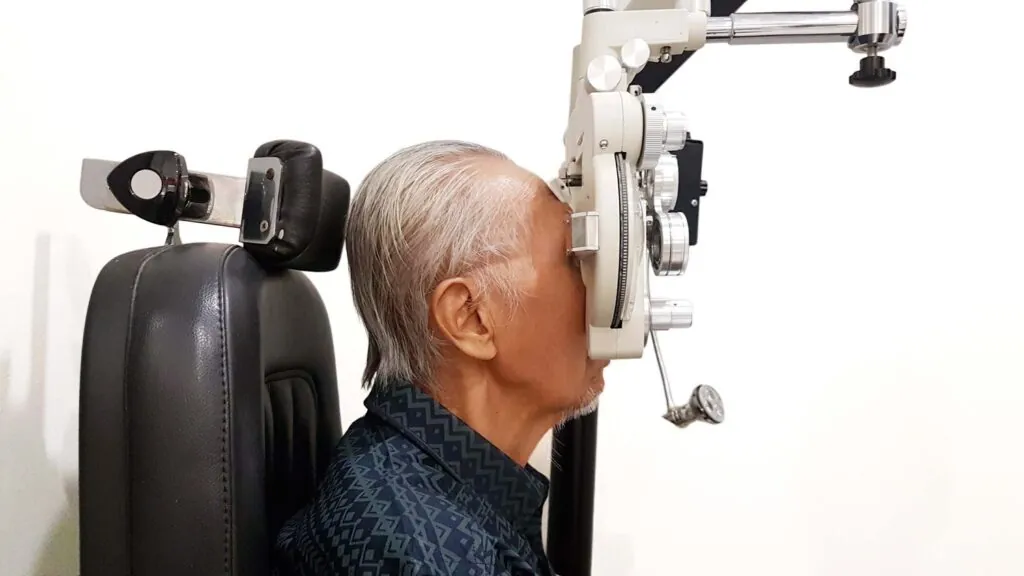
What to watch for
- Faded or yellowed colours
- Glare or halos around lights at night
- Needing to change your glasses more often
What Happens in the Mature and Hypermature Stages?
A mature cataract is mostly or fully cloudy, and vision becomes poor enough to make daily tasks difficult or unsafe, so surgery is usually recommended. A hypermature cataract is over-ripe, and can leak lens proteins or swell, occasionally raising eye pressure or causing inflammation, which needs prompt treatment. (StatPearls)
Standard references describe a mature cataract as an opaque lens with markedly reduced vision, and a hypermature cataract as one that has begun to break down, sometimes becoming a milky, liquefied lens. Reaching this point makes surgery more complex and carries added risk, which is the practical reason not to wait for a cataract to become over-ripe. Prompt attention protects the eye.

What to watch for
- Vision poor enough to affect daily safety
- A visibly cloudy or white pupil
- Eye pain or redness, which needs urgent review
Do the Different Types of Cataract Progress Differently?
Yes. Cataracts are named by where the clouding sits: nuclear at the centre, cortical at the outer rim, and posterior subcapsular at the back. They can progress at different speeds. Posterior subcapsular cataracts, often linked to steroids or diabetes, can worsen within months, while nuclear cataracts usually progress slowly over years. (StatPearls; Cumming et al., 1997)
Nuclear cataracts, the most common age-related type, tend to develop gradually. Posterior subcapsular cataracts are associated with steroid use and diabetes and can move more quickly, particularly if the diabetes is moderate to severe or poorly controlled. This is why a younger person on long term steroids, or someone with diabetes, may notice symptoms sooner than expected, and why the stage of a cataract is only part of the picture. The type matters too.

What to watch for
- Faster changes if you use steroids or have diabetes
- Distance vision dropping first, common in nuclear cataract
- A short history of rapid blurring, which needs a prompt check
Wondering what actually causes a cataract to form in the first place? Our guide to the causes of cataracts beyond age explains the risk factors.
Frequently Asked Questions About the Stages of Cataracts in Singapore
At what stage should a cataract be removed?
There is no fixed stage. Surgery is usually recommended when the cataract affects your daily life, such as reading or driving, rather than at a set point. Waiting until it is very dense can make surgery harder. An eye specialist at Angel Eye & Cataract Centre can advise on timing.
How long does it take for a cataract to go from early to mature?
It varies. Nuclear cataracts often progress slowly over years, while posterior subcapsular cataracts, linked to steroids and diabetes, can worsen within months. Regular eye checks track the change, so you and your eye specialist can plan treatment at the right time in Singapore.
What is a hypermature cataract?
A hypermature cataract is an over-ripe cataract in which the cloudy lens begins to break down, sometimes leaking proteins or swelling, which can raise eye pressure or cause inflammation. It needs prompt treatment. Angel Eye & Cataract Centre can assess and manage a cataract at any stage.
When to Seek Help
Arrange an eye examination if you notice any of the following:
- Blur, glare, or faded colours affecting daily life
- Difficulty with night driving
- Frequent changes to your glasses
- A visibly cloudy pupil, or any eye pain or redness, which needs urgent review
About Angel Eye & Cataract Centre
At Angel Eye & Cataract Centre, Dr Allan Fong and the team assess cataracts at every stage for patients in Singapore. As an eye specialist, Dr Allan Fong examines the lens, identifies the type and stage, and advises on whether and when treatment makes sense for you.
Not sure what stage you are at?
Knowing the stage of a cataract helps, but the more useful question is whether it is affecting your life. If your vision has changed, an eye examination can tell you exactly where things stand and what your options are. To understand the stages of cataracts affecting your sight, arrange a consultation with Angel Eye & Cataract Centre.
Medical References
- StatPearls. Cataract. National Center for Biotechnology Information Bookshelf. https://www.ncbi.nlm.nih.gov/books/NBK539699/
- Medscape. Senile Cataract (Age-Related Cataract). https://emedicine.medscape.com/article/1210914-overview
- National Eye Institute. Cataracts. https://www.nei.nih.gov/eye-health-information/eye-conditions-and-diseases/cataracts
- National Eye Institute. Cataract Surgery. https://www.nei.nih.gov/eye-health-information/eye-conditions-and-diseases/cataracts/cataract-surgery
- Chua J, Koh JY, Tan AG, et al. Ancestry, Socioeconomic Status, and Age-Related Cataract in Asians: SEED Study. Ophthalmology. 2015;122(11):2169-2178. doi:10.1016/j.ophtha.2015.06.052
- Cumming RG, Mitchell P, Leeder SR. Use of inhaled corticosteroids and the risk of cataracts. N Engl J Med. 1997;337(1):8-14. doi:10.1056/NEJM199707033370102
- Li L, Wan XH, Zhao GH. Meta-analysis of the risk of cataract in type 2 diabetes. BMC Ophthalmol. 2014;14:94. doi:10.1186/1471-2415-14-94
- MedlinePlus. Cataract. https://medlineplus.gov/cataract.html