
Summary
- Surgery is the only cataract treatment that works. No eye drop, supplement or stronger glasses can clear a clouded lens (National Eye Institute, 2023).
- You do not need to wait for a cataract to “ripen”. Cataract surgery is appropriate once blurred vision interferes with reading, driving or work, and a very dense cataract is harder to remove.
- Cataract surgery is a day procedure under local anaesthesia with IV sedation. Most patients feel only mild pressure, and vision improves in about 9 out of 10 people (National Eye Institute, 2023).
- A cataract cannot grow back, as the clouded lens is replaced with a clear artificial one. In Singapore, an eye specialist at Angel Eye & Cataract Centre can confirm whether a cataract is behind your blurring.
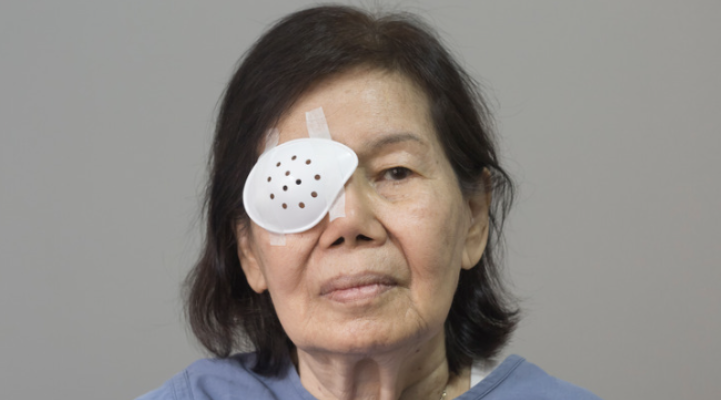
Madam Tan (not her real name) had been squinting at her mahjong tiles for more than a year. At first she blamed the lighting. Then she blamed her glasses, and changed them twice. The white tiles looked faintly yellow, headlights on the drive home smeared into halos, and reading the newspaper took her twice as long as before. Her daughter suggested an eye check more than once. Each time, Madam Tan waved her away with the same reply: no need so early.
Why go through surgery before you have to? So she waited. She stopped driving at night. She gave up her evening walks because the glare from passing cars unsettled her. She began turning down dinner invitations, quietly embarrassed that she could no longer read a menu. Her world grew a little smaller each month, and she told herself this was simply what growing old felt like.
What Madam Tan did not know was that the idea that you have to wait for a cataract to be fully developed belongs to an earlier era of surgery. It has not been true for decades. By the time she finally booked an eye appointment, prompted by a near miss at a pedestrian crossing, she had spent a year living with a problem that could have been sorted long before. Her first question in the consulting room was the one so many people ask.
Do You Really Need to Wait Until a Cataract Is Ripe?
No. The idea that a cataract has to mature before it can be removed fully belongs to an older era of surgery. These days the decision comes down to how much the cloudiness affects what you do each day, whether that is reading, driving, or working. Waiting until a cataract is very dense can actually make the operation harder. (National Eye Institute, 2023)
‘’By the time I see many patients, they have already given up things they love because they thought they had to wait,’’ says Dr Allan Fong, an eye specialist at Angel Eye & Cataract Centre. There is no prize for holding out. The right time is when your vision stops you living the way you want to. The National Eye Institute takes a similar view: most people do not need to rush, but delaying does not protect the eye either, so the choice should follow your symptoms rather than the calendar.
Can Eye Drops or Glasses Make a Cataract Go Away?
No. Nothing other than surgery removes a cataract. No eye drop, supplement, or new spectacle prescription can clear the clouding, though stronger glasses or brighter lighting may help a little in the early stages. Those are comfort measures, not a cure, and they do not stop the cataract slowly progressing. (National Eye Institute, 2023)
The National Eye Institute is clear that surgery is currently the only way to treat a cataract. Early on there is nothing wrong with a fresh prescription or a brighter reading lamp to tide you over, and your eye specialist may suggest exactly that. The important thing is to recognise these for what they are. Madam Tan’s repeated new glasses were a sign her lens was changing, not a solution to it.
What to watch for
- Needing to change your glasses more often than before
- Relying on brighter and brighter light to read
- Colours, especially whites, looking dull or yellowed
Is Cataract Surgery Dangerous or Painful?
For most people, no. Cataract surgery is one of the most commonly performed operations anywhere, and it is done as day surgery. You stay awake but relaxed, the eye is fully numbed, and the procedure is carried out under local anaesthesia with IV sedation. Most people feel nothing more than mild pressure. (National Eye Institute, 2023)No. The idea that a cataract has to mature before it can be removed fully belongs to an older era of surgery. These days the decision comes down to how much the cloudiness affects what you do each day, whether that is reading, driving, or working. Waiting until a cataract is very dense can actually make the operation harder. (National Eye Institute, 2023)
The National Eye Institute notes that patients are usually awake during the operation, and that it improves vision in about nine out of ten people. Serious problems are uncommon, though no surgery is entirely without risk, which is why your surgeon checks that your eyes, and your general health such as blood pressure, are suitable beforehand. For many people, the fear of pain keeps them away far longer than the few minutes the procedure itself takes.
What to watch for
- Vision problems that affect your safety, such as night driving
- Difficulty recognising faces or reading despite new glasses
- Anxiety about the operation that stops you seeking advice
Is a Cataract Really That Common, and Will It Come Back?
A cataract cannot grow back, because the cloudy lens is removed and replaced with a clear artificial one. It is also extremely common: globally, cataract is the most frequent cause of blindness, and the number of people affected rose by nearly 138% between 1990 and 2021, from about 42 million to 101 million. (Global Burden of Disease, 2021; National Eye Institute, 2023)
Some people notice a haze again months or years after surgery, as the thin membrane behind the new lens thickens. This is a separate and common event called posterior capsule opacification, cleared in minutes with a simple laser, and it is not a sign that anything went wrong. The scale of cataract worldwide is easy to underestimate. The global number of people living with it climbed from roughly 42 million in 1990 to about 101 million in 2021, a rise of nearly 138%, driven mainly by growing and ageing populations (Global Burden of Disease, 2021). Demand for surgery is rising faster than the number of eye surgeons, which is one more reason not to leave a treatable cataract sitting untreated. In Singapore, cataract remains the most common cause of reversible sight loss, and local cases are projected to rise sharply by 2040 (Majithia et al., 2021).
What to watch for
- A gradual return of cloudiness some time after surgery
- Glare or haziness returning after a period of clear vision
- Any sudden change in vision, which should be checked promptly
Cataracts form for all sorts of reasons, not just age. If you are curious why, our guide to the causes of cataracts beyond age walks through the main risk factors.
Frequently Asked Questions About Cataract Surgery in Singapore
At what age should I get my eyes checked for cataracts in Singapore?
Regular eye checks make sense from around 60, and earlier if you have diabetes or a family history. Because a cataract usually develops slowly and without pain, many people in Singapore have one without realising. A check at Angel Eye & Cataract Centre can confirm whether a cataract is behind your blurring.
Is cataract surgery safe for older patients?
Age on its own rarely rules it out. The operation is done under local anaesthesia with IV sedation and is generally well tolerated well into later life. Your doctor assesses your overall eye health first, and many people in their eighties regain useful vision after cataract surgery.
How do I know if my cataract is ready for surgery?
The National Eye Institute notes that patients are usually awake during the operation, and that it improves vision in about nine out of ten people. Serious problems are uncommon, though no surgery is entirely without risk, which is why your surgeon checks that your eyes, and your general health such as blood pressure, are suitable beforehand. For many people, the fear of pain keeps them away far longer than the few minutes the procedure itself takes.
When to Seek Help
It is worth booking a comprehensive eye examination if you notice any of the following:
- Blurred or cloudy vision that new glasses do not fix
- Glare or halos around lights, especially at night
- Colours appearing faded or yellowed
- Difficulty with everyday tasks such as reading or driving
About Angel Eye & Cataract Centre
At Angel Eye & Cataract Centre, Dr Allan Fong and the team look after patients with cataracts across Singapore. With many years of experience as an eye specialist, Dr Allan Fong examines the lens, explains the options in plain terms, and helps each person decide when the time is right. Where surgery is needed, it is carried out under local anaesthesia with IV sedation.
Not sure whether it is time?
Clear sight should not have to wait on a myth. If cloudy vision is making everyday life harder, a proper eye examination will tell you what is really going on and what your choices are, with no pressure to rush. To find out whether cataract surgery is right for you, arrange a consultation with Angel Eye & Cataract Centre.
Medical References
- National Eye Institute. Cataracts. https://www.nei.nih.gov/eye-health-information/eye-conditions-and-diseases/cataracts
- National Eye Institute. Cataract Surgery. https://www.nei.nih.gov/eye-health-information/eye-conditions-and-diseases/cataracts/cataract-surgery
- Global, regional, and national burden of cataract: a comprehensive analysis and projections from 1990 to 2021 (Global Burden of Disease 2021). PLoS One. 2025. doi:10.1371/journal.pone.0326263
- Majithia S, et al. Cohort Profile: The Singapore Epidemiology of Eye Diseases Study. Int J Epidemiol. 2021;50(1):41. doi:10.1093/ije/dyaa238
- Chua J, Lim B, Fenwick EK, et al. Prevalence, Risk Factors, and Impact of Undiagnosed Visually Significant Cataract: SEED Study. PLoS One. 2017;12(1):e0170804. doi:10.1371/journal.pone.0170804
- Chua J, Koh JY, Tan AG, et al. Ancestry, Socioeconomic Status, and Age-Related Cataract in Asians: SEED Study. Ophthalmology. 2015;122(11):2169-2178. doi:10.1016/j.ophtha.2015.06.052
- Li L, Wan XH, Zhao GH. Meta-analysis of the risk of cataract in type 2 diabetes. BMC Ophthalmol. 2014;14:94. doi:10.1186/1471-2415-14-94
- Cumming RG, Mitchell P, Leeder SR. Use of inhaled corticosteroids and the risk of cataracts. N Engl J Med. 1997;337(1):8-14. doi:10.1056/NEJM199707033370102
- MedlinePlus. Cataract. https://medlineplus.gov/cataract.html