

Summary
Cataract surgery in Singapore is one of the most commonly performed operations of any kind, and understanding it from start to finish takes a good deal of the anxiety out of the decision. A cataract is the gradual clouding of the eye’s natural lens, and because it usually comes on slowly, many people live with it for years, mistaking the change for ordinary ageing. There is no medicine or eye drop that clears a cataract; surgery is the only treatment, and it involves removing the cloudy lens and replacing it with a clear artificial one. The right time to act is not a fixed stage but the point at which blurred vision starts to interfere with daily life. The operation is a short-day procedure under local anaesthesia with IV sedation; recovery is usually quick, and the lens choice can be tailored to your lifestyle. Complications are uncommon, and most people see more clearly within days. This article brings together the key points, from recognising a cataract to choosing a lens and understanding recovery, and points you to more detailed articles on each step. Read on for the full picture.
A cataract rarely announces itself. It arrives so gradually that most people adjust to it without noticing, turning up the lights, sitting closer to the television, giving up night driving, making one quiet decision at a time. By the time the change is impossible to ignore, it has often been developing for years, and the person living with it has come to think of dimmer, hazier vision as simply how their eyes are now.
That slow onset is exactly why a clear overview is so useful. Cataract surgery has a reputation, much of it inherited from a time when the operation was larger and the recovery longer, and that reputation keeps people waiting well past the point where treatment would have helped. The reality today is a good deal more reassuring, and knowing the whole picture makes the path ahead far less daunting.
Here are the key points, gathered in one place. It runs from the first signs of a cataract through the decision to treat it, the operation itself, the choice of lens, and what recovery is really like. Here is what you need to know.
What Is a Cataract, and When Do You Need Surgery?
A cataract is a clouding of the eye’s natural lens that blurs and dims vision over time. Surgery is the only way to treat it, and it is recommended not at a fixed stage but when the cloudiness begins to interfere with everyday tasks such as reading, driving, or work. Waiting rarely harms the eye, though very dense cataracts are harder to remove. (National Eye Institute)
Because a cataract worsens slowly, the decision to treat it is guided by your life rather than by a number. In Singapore, a large population study found that cataract is a common cause of reversible visual impairment, and that many people are living with one without a diagnosis. If your vision has clouded, an eye examination can confirm whether a cataract is the cause and discuss whether it is the right time.
What Happens During the Operation and Recovery?
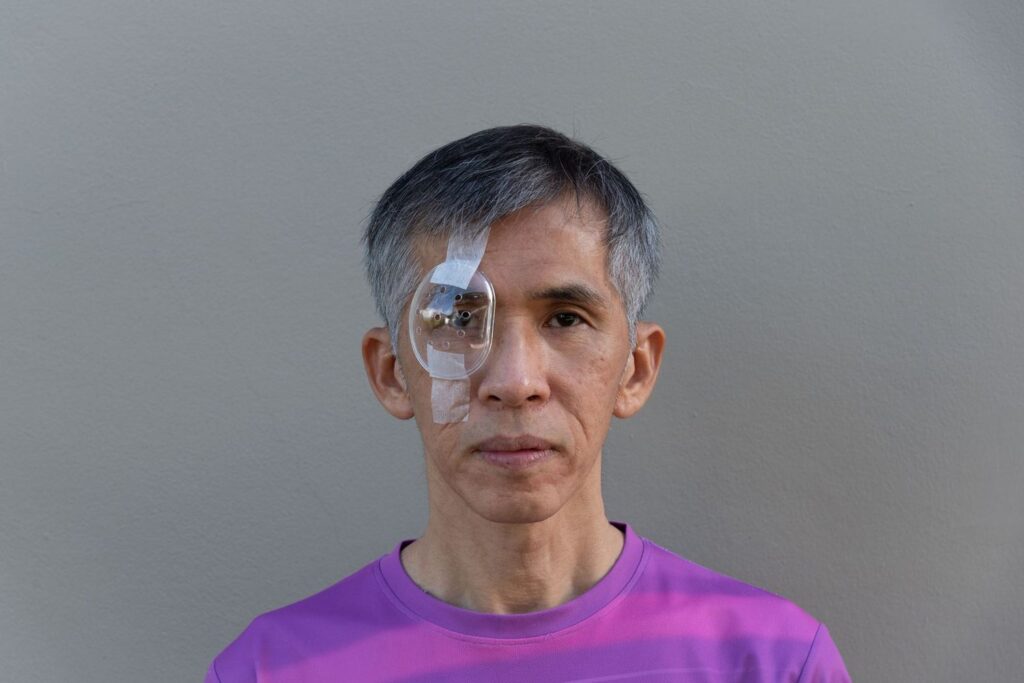
Cataract surgery is a short-day procedure under local anaesthesia with IV sedation. The surgeon removes the cloudy lens through a small incision and replaces it with a clear artificial one. Recovery is usually quick, with clearer vision often within days and full healing over about four to six weeks. (National Eye Institute)
You stay awake but relaxed; the eye is fully numbed, and the operation typically takes only 15 to 30 minutes. Afterwards, a few sensible precautions protect the eye while it settles, such as avoiding rubbing and swimming for a couple of weeks, and eye drops help prevent infection and calm inflammation. Most people return to ordinary life within days rather than weeks.
What to watch for
- A short day procedure, not an overnight stay
- Clearer vision often within a day or two
- Full healing over about four to six weeks
What Lens Options Are Available?
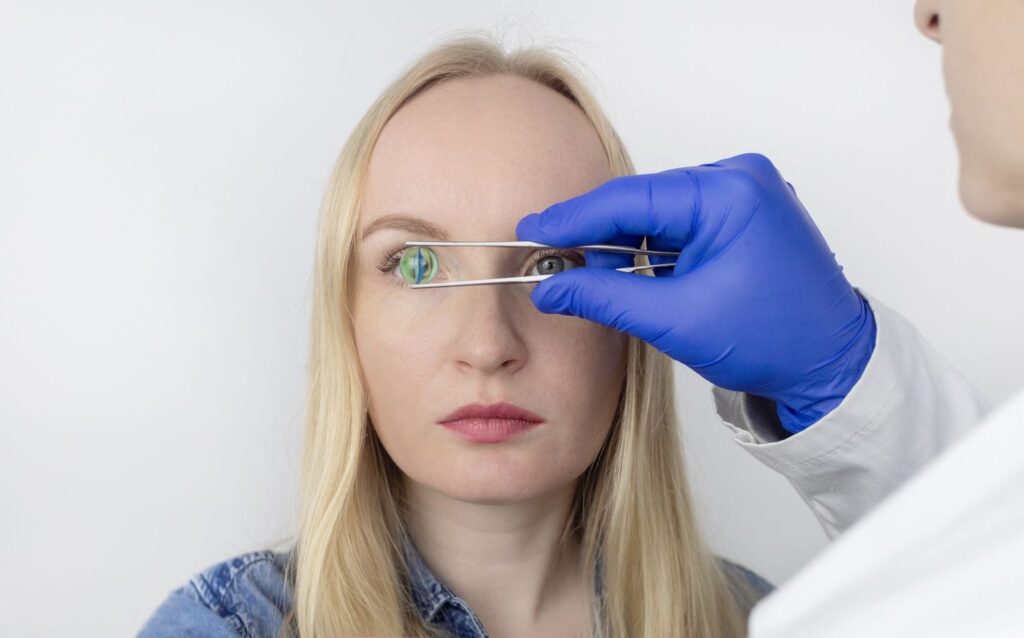
The cloudy lens is replaced with an artificial one, and the options range from a monofocal lens, which provides clear vision at one distance, to extended-depth and multifocal lenses, which reduce the need for glasses across a wider range of distances but can cause more night-time glare. A toric lens corrects astigmatism. The right choice depends on your eyes and daily life. (Leyland & Calladine, 2016)
There is no single lens that suits everyone. A monofocal lens is a dependable choice for those happy to wear reading glasses, while multifocal and extended-depth designs appeal to people keen to reduce their reliance on glasses, provided they accept the trade-off of occasional halos at night. This is a decision worth taking slowly, with your surgeon, and weighing it against how you actually spend your day.
What to watch for
- Monofocal: sharp at one distance, glasses for reading
- Multifocal and extended-depth: fewer glasses, more night glare
- Toric: corrects astigmatism
How Common and How Safe Is Cataract Surgery?
Cataract surgery is among the most commonly performed operations in the world, and it is generally very safe. It improves vision in the large majority of people, and serious complications are uncommon. Worldwide, the number of people affected by cataract rose by nearly 138% between 1990 and 2021, making treatment more important than ever. (Global Burden of Disease, 2021)
The scale is striking: the global number of people living with cataract climbed from about 42 million in 1990 to roughly 101 million in 2021, driven mainly by population growth and ageing. As demand rises faster than the number of eye surgeons, timely treatment matters, and the good news is that the operation itself has never been safer or more refined. Most people who have it done wonder, afterwards, why they waited.
What to watch for
- One of the most common operations performed anywhere
- Improves vision for the large majority
- Serious complications are uncommon
Each step here has its own fuller guide. A good place to go deeper is the four stages of cataracts, which explain how the condition progresses.
Frequently Asked Questions About Cataract Surgery in Singapore
Is cataract surgery worth it?
For most people whose sight is being affected, yes. It is a short, generally very safe procedure that improves vision in the vast majority of cases, and most people return to normal life within days. An eye specialist at Angel Eye & Cataract Centre can tell you whether it would help your eyes.
How do I know if I have a cataract?
A cataract usually causes gradual blurring, glare, faded colours, and difficulty with night driving, changes that are easy to mistake for ageing. Because it comes on slowly, many people in Singapore have one without realising. An eye examination can confirm it.
Will I need glasses after cataract surgery?
Often for some tasks, yes. With a monofocal lens, most people wear glasses for reading. Multifocal and extended-depth lenses reduce that need but do not always remove it. Your surgeon can give you a realistic idea based on the lens you choose.
When to Seek Help
It is worth arranging a comprehensive eye examination if you notice:
- Blurred or cloudy vision that new glasses do not fix
- Glare or halos around lights, especially at night
- Colours appearing faded or yellowed
- Difficulty with everyday tasks such as reading or driving
About Angel Eye & Cataract Centre
At Angel Eye & Cataract Centre, Dr Allan Fong and the team provide cataract assessment and treatment for patients throughout Singapore. As an eye specialist, Dr Allan Fong examines your eye, clearly explains each stage of the process, and helps you decide on the right time and the right lens. Surgery, where needed, is carried out under local anaesthesia with IV sedation.
Ready to see the whole picture about your eyes?
A cataract is one of the most treatable causes of failing vision, and understanding the whole picture makes the decision far easier. If your sight has clouded, a thorough eye examination will tell you where you stand and what your choices are. To find out what cataract surgery in Singapore could offer you, arrange a consultation with Angel Eye & Cataract Centre.
Medical References
- National Eye Institute. Cataracts. https://www.nei.nih.gov/eye-health-information/eye-conditions-and-diseases/cataracts
- National Eye Institute. Cataract Surgery. https://www.nei.nih.gov/eye-health-information/eye-conditions-and-diseases/cataracts/cataract-surgery
- Global, regional, and national burden of cataract, 1990 to 2021 (Global Burden of Disease 2021). PLoS One. 2025. doi:10.1371/journal.pone.0326263
- Chua J, Lim B, Fenwick EK, et al. Prevalence, Risk Factors, and Impact of Undiagnosed Visually Significant Cataract: SEED Study. PLoS One. 2017;12(1):e0170804. doi:10.1371/journal.pone.0170804
- Chua J, Koh JY, Tan AG, et al. Ancestry, Socioeconomic Status, and Age-Related Cataract in Asians: SEED Study. Ophthalmology. 2015;122(11):2169-2178. doi:10.1016/j.ophtha.2015.06.052
- Majithia S, et al. Cohort Profile: The Singapore Epidemiology of Eye Diseases Study. Int J Epidemiol. 2021;50(1):41. doi:10.1093/ije/dyaa238
- Leyland M, Calladine D, et al. Multifocal versus monofocal intraocular lenses after cataract extraction. Cochrane Database of Systematic Reviews. 2016. https://pmc.ncbi.nlm.nih.gov/articles/PMC6463930/
- American Academy of Ophthalmology. Cataract Surgery Recovery. https://www.aao.org/eye-health/tips-prevention/safe-exercise-driving-cataract-surgery-recovery
- MedlinePlus. Cataract. https://medlineplus.gov/cataract.html