
Summary
Bladeless cataract surgery is the laser-assisted version of the operation, in which a femtosecond laser performs steps such as making the incision and opening the lens capsule that a surgeon would otherwise do by hand. The word bladeless is reassuring, and the precision is real, but it is worth understanding what it does and does not change. Based on current evidence, bladeless and standard cataract surgery yield very similar vision and safety outcomes, so for most people, the laser does not provide a sharper result. What it does offer is a little more automation of certain steps and slightly gentler energy inside the eye, which can be genuinely useful in particular cases, such as a very dense cataract. Against that, it adds cost, and reviews have generally found it less cost-effective than the standard approach. None of this makes bladeless surgery a poor choice; it simply means the decision should rest on your own eyes and priorities rather than on the appeal of the word itself. This article explains what bladeless cataract surgery really involves, when it can help, and how to weigh it against standard surgery. Read on for the full picture.
Mrs Foong (not her real name) had been quoted for two versions of the same operation, and the difference in wording unsettled her more than the difference in price. One was described simply as cataract surgery. The other was bladeless, a word that seemed to carry an unspoken promise: surely something done without a blade must be safer, and surely safer was worth paying for.
It is an easy assumption to make. In much of life, the newer and more refined option really is better. What most people are never told is that the choice is more balanced than marketing suggests, and that the two roads lead to much the same place.
Before she decided, she asked the key question: what would the laser change for her eyes, and was it worth the extra cost? The answer is simple. Here is what bladeless cataract surgery really means and how to think about it.
What Does Bladeless Cataract Surgery Mean?
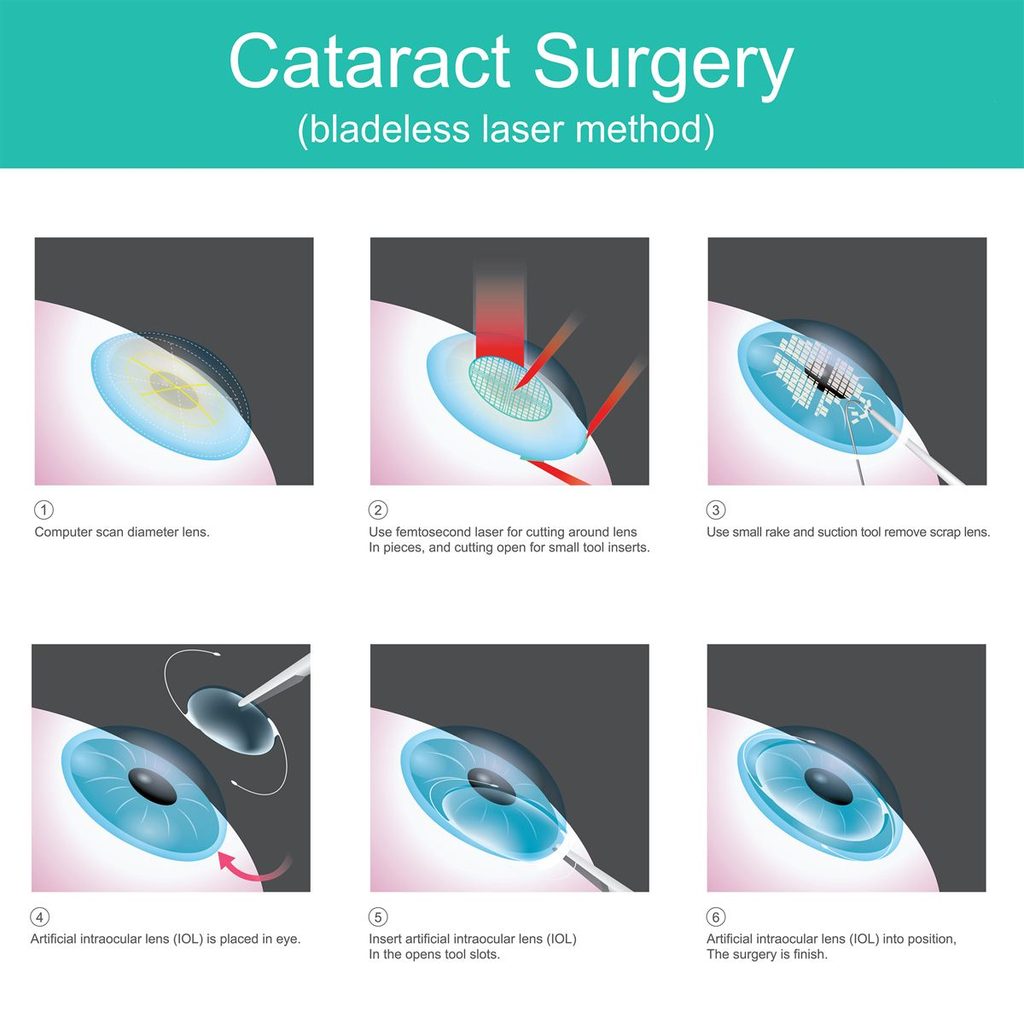
Bladeless cataract surgery uses a femtosecond laser, rather than a handheld blade, to perform some steps of the operation, such as the corneal incision and opening the lens capsule. The surgeon still removes the cataract and inserts the new lens. It is another name for laser-assisted cataract surgery.
The laser automates a few of the early steps with computer guidance, which is where the term bladeless comes from. It is not an entirely different operation but a variation on the standard one, and the surgeon remains at its centre throughout. Understanding this helps put the choice in proportion, because the steps that most affect your result, the cataract removal and lens placement, are common to both approaches.
Is Bladeless Cataract Surgery Better Than Standard?
For most people, the two give very similar results. Large studies and an assessment by the American Academy of Ophthalmology have found comparable vision and comparable safety between laser-assisted and standard cataract surgery, with neither clearly outperforming the other. The precision of the laser has not translated into sharper sight for the average patient.
This is the crux of the matter, and it is easily lost beneath a reassuring name. A large randomized trial found no meaningful difference in visual outcomes, and the Academy’s review reached the same conclusion. That does not diminish the skill involved in either; it simply means that, for a straightforward cataract, the standard operation in experienced hands is every bit as effective.
What to watch for
- Claims that bladeless surgery is sharper for everyone
- Pressure to choose the costlier option quickly
- Whether any benefit applies to your eyes in particular
When Might Bladeless Surgery Actually Help?
The laser uses slightly less ultrasound energy inside the eye, which may help in particular cases, such as a very dense cataract or an eye with a low reserve of corneal cells. In these situations, the gentler approach can offer a real, if modest, advantage. For a routine cataract, that benefit is far less relevant.
These are specific circumstances rather than the rule. A meta-analysis found that the laser reduced the required ultrasound energy and time, which is most meaningful in eyes that are more vulnerable to it. For a straightforward cataract in an otherwise healthy eye, the difference is small, which is exactly why an experienced surgeon will tell you whether your eyes fall into a group the laser genuinely helps.

What to watch for
- A very dense or hard cataract
- A low count of corneal cells
- Any complex feature your surgeon has flagged
Is Bladeless Cataract Surgery Worth the Extra Cost?
Because bladeless and standard surgery give similar results for most people, and the laser adds cost, reviews have generally found it less cost-effective. For a routine cataract, many people reasonably choose standard surgery; for select eyes, the laser may justify its place. The right answer depends on your eyes and your budget.
A cost-effectiveness analysis concluded that the laser is not cost-effective at its current price for routine cases. That is not a verdict against the technology, but a reminder that the extra spend buys precision in certain steps rather than better vision for the average eye. For Mrs Foong, framing the choice around her own eyes rather than the word “bladeless” made the decision far simpler.

What to watch for
- Whether the extra cost fits your budget
- Whether your eyes are in a group the laser helps
- A clear decision that benefits you
Frequently Asked Questions About Bladeless Cataract Surgery in Singapore
Is bladeless cataract surgery safer than standard surgery?
The evidence shows similar safety for both, with comparable complication rates. Bladeless surgery is not a shortcut around risk, and safety depends far more on the surgeon and your eye health than on whether a laser is used. An eye specialist at Angel Eye & Cataract Centre can advise on what suits your eyes.
Does bladeless cataract surgery mean no cutting at all?
Not quite. The laser makes some of the openings that a blade would otherwise make, which is where the name comes from, but it is still surgery, and the surgeon still removes the cataract and inserts the lens. It is a laser-assisted version of the standard operation.
Do I need bladeless cataract surgery?
Most people do not. Standard surgery is highly effective for routine cataracts, and the laser mainly helps in select cases, such as very dense cataracts. Whether it would benefit you is a question for your surgeon, who can weigh it against the added cost at Angel Eye & Cataract Centre.
How to Decide
When weighing bladeless against standard cataract surgery, it helps to ask:
- Whether the laser would genuinely benefit your particular eyes
- What is the difference in cost
- What the evidence shows for a cataract like yours
- What your surgeon would recommend, and why
About Angel Eye & Cataract Centre
At Angel Eye & Cataract Centre, Dr Allan Fong and the team explain both bladeless and standard cataract surgery to patients in Singapore. As an eye specialist, Dr Allan Fong assesses your eyes and describes what each approach would and would not add for you, so the choice is an informed one. Surgery is carried out under local anaesthesia with IV sedation.
Dr Allan Fong performs bladeless cataract surgery using the Johnson & Johnson Vision CATALYS femtosecond laser system. He has extensive experience with the procedure and is also a trainer, teaching other surgeons how to use the technology.
That experience matters, but it does not mean the laser is right for every eye. Dr Fong uses it where its precision is likely to help, and recommends standard surgery where that serves the eye just as well.
The decision is made individually, after a full examination of your eyes and a discussion of your needs, the evidence and the cost. That way, the choice between bladeless and standard surgery rests on what your eyes need rather than on the name of the procedure.
Offered a bladeless option and unsure?
A reassuring name is not the same as a better result, and a good decision starts with the right information. If you have been offered bladeless cataract surgery and are unsure whether it is worth it, a clear assessment will tell you what actually matters for your eyes. To talk it through, arrange a consultation with Angel Eye & Cataract Centre.
Medical References
- Kim BZ, et al. Femtosecond Laser-Assisted Cataract Surgery: A Report by the American Academy of Ophthalmology. Ophthalmology. 2022. https://pubmed.ncbi.nlm.nih.gov/35570159/
- Schweitzer C, et al. Femtosecond laser-assisted versus phacoemulsification cataract surgery (FEMCAT). The Lancet. 2020. https://www.sciencedirect.com/science/article/abs/pii/S014067361932481X
- Meta-analysis: femtosecond laser-assisted versus conventional phacoemulsification cataract surgery. https://www.ncbi.nlm.nih.gov/pmc/articles/PMC4542520/
- Abell RG, et al. Cost-effectiveness of femtosecond laser-assisted cataract surgery versus phacoemulsification. Ophthalmology. 2014. https://pubmed.ncbi.nlm.nih.gov/24120324/
- National Eye Institute. Cataract Surgery. https://www.nei.nih.gov/eye-health-information/eye-conditions-and-diseases/cataracts/cataract-surgery
- MedlinePlus. Cataract. https://medlineplus.gov/cataract.html